2025/11/01

2025 11 05 PROSPECTIVE ET GEOPOLITIQUE

 PROSPECTIVE ET GEOPOLITIQUE


Une journée organisée par IFRN France

avec le soutien du Département des Yvelines

pour comprendre comment retrouver une vision prospective de notre avenir

dans un environnement géopolitique hautement incertain


Cet évènement se déroulera le 5 novembre 2025 dans la maison de Madame

Elisabeth à Versailles, où nous accueillerons principalement les intervenants,

compte du nombre de places très limité. Nous vous proposons donc un lien en

distanciel, qui vous permettra de suivre la journée et de poser vos questions.


Prospective et Géopolitique


Jusqu’au début du XXIᵉ siècle, la prospective s’est imposée comme un outil précieux : dans un monde relativement stable, façonné par la mondialisation, il était possible d’identifier les grands défis à venir et de bâtir des scénarios à long terme sur une base limitée d’incertitudes. Les opinions publiques ont alors pris conscience des enjeux du siècle : démographie, climat, ressources, nouvelles technologies.


Mais ce cadre n’existe plus. Les accords économiques historiques se défont, les frontières sont contestées – de l’Ukraine à l’Arctique, de Taïwan au Groenland –, les dépenses militaires atteignent des sommets et l’IA devient un champ de bataille stratégique, avec des interdictions d’exportation technologique révélant l’ampleur de la rivalité sino-américaine. Même les engagements climatiques vacillent, entre recul des ZFE en Europe et suspension des programmes de suivi climatique par la NASA. Dans un tel contexte, suivre l’actualité au jour le jour donne le sentiment d’un monde insaisissable, où l’avenir serait devenu imprévisible.


Et pourtant, il n’en est rien. Derrière le bruit des événements se dessinent des forces profondes et stables, liées à l’histoire, à la culture, aux structures sociales et économiques des nations. Le slogan « Make America Great Again » en est l’illustration : il exprime moins une improvisation politique qu’une réaction profonde au sentiment de déclin américain face à la montée en puissance de la Chine.


C’est précisément là que la prospective retrouve toute son utilité : réduire l’incertitude, mettre en perspective les mouvements du présent et proposer des visions construites de l’avenir.


La rencontre du 5 novembre à Versailles s’inscrit dans cette ambition. Nous porterons notre attention sur les grandes évolutions de l’hémisphère nord à l’horizon 2050, entre les 3 grandes zones que sont l’Amérique, l’Europe et l’Asie. Pour chacune, nous nous interrogerons :


·       Quelle vision du monde guide ses choix stratégiques, entre ambitions et menaces perçues ?


·       Quels ressorts culturels, sociaux, économiques et financiers alimentent ses décisions ?


·       Comment les rapports de force entre ces puissances peuvent-ils évoluer, et avec quels risques de confrontation ?


·       Quelles initiatives de coopération internationale pourraient infléchir sa trajectoire et ouvrir la voie à un apaisement durable ?


·       Peut-on encore envisager un retour à un ordre international régulé, reposant sur des instances reconnues et respectées ?


Pour répondre à ces questions, nous réunirons des experts de géopolitique et de relations internationales, dont les analyses nourriront les travaux des prospectivistes présents. Ensemble, nous esquisserons des scénarios plausibles pour les décennies à venir, intégrant les grandes transformations démographiques, les bouleversements climatiques, les opportunités technologiques, mais aussi les risques militaires et sociaux.


Notre objectif est clair : ne pas se laisser aveugler par les turbulences immédiates, mais éclairer les lignes de force qui dessinent le futur de notre monde à l’horizon 2050.


Organisation de la journée du 5 novembre 2025


9h-9h30 : Accueil des participants et présentateurs en présentiel

                Accueil des participants en distanciel


9h45 – 10h15 : Introduction

·       Michel SALOFF-COSTE, Prospectiviste, Président IFRN France

·       Denis LEMERCIER, ex-dirigeant d’entreprises (Quantel lasers, JM.Weston chaussures…), Secrétaire général IFRN France

10h15-11h15 Session 1 : Le monde qui vient: un tour d’horizon des questions cruciales  

·       Jean-Louis VICHOT, Vice-Amiral (2S), ancien Directeur du Centre d’Etudes Stratégiques de la Marine

11h15-11h30 Break 


11h30-12h30 Session 2 : Etats-Unis, Russie, Chine : quelles évolutions et quels comportements dans les prochaines décennies?

·       Jean-Eric AUBERT, Président de la Fondation 2100, ancien fonctionnaire international (OCDE, Banque Mondiale)

12h30-14h00 Déjeuner


14h00-14h45 Session 3 : Scénarios pour l'Europe: rétro-prospective et prospective

·       Carine DARTIGUEPEYROU, Docteur en Sciences Politiques, Présidente de la Société Française de Prospective

 14h45-15h30 Session 4 : L’avenir des entreprises : stratégies et réorganisations dans une Guerre froide 2.0 

·       Camille GAUTHIER, chercheur-Intervenant au croisement des Futures Studies, des transformations culturelles et de la stratégie des organisations 

 15h30-15h45 Break


15h45-16h45 Session 5 : Comment prévenir la guerre? Comment être en paix? 

·       Bertrand BADIE, Professeur émérite des universités à Sciences Po Paris (à distance)


16h45-17h00 : Conclusion 

·       Jean-Eric AUBERT, Michel SALOFF-COSTE et Denis LEMERCIER


Lien pour la réunion « Géopolitique et Prospective » du 5 novembre 2025


Microsoft Teams Besoin d'aide ?

Rejoindre la réunion maintenant

Numéro de réunion : 394 165 922 268 6

Code secret : hL7Cv6P4


Participer par téléphone

+33 1 73 24 00 89,,781681057# France, All locations

Trouver un numéro local

Numéro de conférence téléphonique : 781 681 057#

Inviter quelqu’un à prendre part à une conversation sur un appareil en visioconférence

Clé du locataire : yvelines@m.webex.com

Numéro de vidéo : 127 269 609 4

Plus Dans un monde où les repères se déplacent à toute vitesse — entre rivalités sino-américaines, recomposition des alliances, bouleversements climatiques et révolutions technologiques — retrouver une vision prospective devient un acte stratégique.


Témoignage d’Agathe Escalier :


J’ai eu le privilège d’être invitée par Michel Saloff-Coste à la journée « Prospective et Géopolitique », organisée par l’IFRN France avec le soutien du Département des Yvelines.

Une rencontre rare, au croisement de la pensée et de l’action, pour interroger les trajectoires possibles de notre monde à l’horizon 2050 :


🌐 Les mutations géopolitiques entre Amérique, Europe et Asie


⚖️ Les tensions économiques, culturelles et technologiques qui redéfinissent la puissance


🕊️ Les voies possibles vers une paix durable dans un contexte d’incertitude


💭 Et la manière dont la prospective peut encore éclairer nos décisions collectives


Bien que ces thématiques puissent sembler éloignées de mes domaines d’expertise — le luxe, la mode, la production et le développement durable — elles s’inscrivent en réalité au cœur de ces enjeux. La nature globalisée des chaînes de production, l’influence géopolitique et le soft power exercé par la mode particulièrement en France, ainsi que son rôle de levier de réflexion sur notre rapport contemporain à la consommation et à la surconsommation, en font un champ d analyse directement pertinent. De plus, la mode est un vecteur privilégié pour explorer les enjeux immatériels, culturels et narratifs qui structurent nos sociétés. 


Ces réflexions permettent d'alimenter ma réflexion qui consiste précisément à repenser le paradigme économique de cette industrie afin que la durabilité devienne un moteur de résilience et de performance pour les entreprises, tout en intégrant ces dimensions culturelles et sociétales dans les stratégies de long terme.

Imaginer le futur du luxe, c’est participer à la réinvention d’un récit collectif où la durabilité devient la nouvelle forme de puissance. 🌍✨ 


Merci aux intervenants pour la profondeur de leurs analyses :

Carine Dartiguepeyrou, Jean-Eric AUBERT, Jean-Louis Vichot, Francis Jutand, Camille Gauthier, Olivier Réaud, Henri Choukroun, @JeanMichel Olagnier, Virginie Alonzi, Cecilia Ercoli, Denis Lemercier, Elizabeth Stumpfoll, Jamila BAYA, Laurent LEGENDRE, Jean-Bernard Kovarik — et bien sûr à Michel Saloff-Coste pour son invitation et sa vision.


#Prospective #Géopolitique #Luxe #Mode #Durabilité #SoftPower #IFRN #Yvelines #Futur #TransformationCulturelle


2025/07/31

2025 07 31 OSLO REFLEXION SUR MON VOYAGE EN SCANDINAVIE

 ✧ Mon voyage en Scandinavie : un tour du futur ✧

Le 1er juin 2025, j’ai quitté Lille. J’avais besoin de prendre de la distance, au sens géographique comme au sens intellectuel. Je suis monté vers le nord, vers cet étrange territoire qu’on appelle Scandinavie, où l’on dit que le futur est déjà là, discret mais bien réel.
🇩🇰 Copenhague — La ville qui respire déjà demain
Ma première étape fut Copenhague. Ce qui m’a frappé, ce n’est pas seulement l’esthétique urbaine — faite de briques, d’eau et de silence — mais le souci du collectif inscrit dans chaque détail. La ville est pensée pour ses habitants : des vélos partout, une empreinte carbone en baisse, une architecture qui respire.
C’est ici que j’ai commencé à sentir ce que veut dire vivre dans un modèle post-industriel : une société où la croissance n’est pas l’obsession, mais où la qualité de vie est un objectif assumé.
🇸🇪 Stockholm — Entre archipel et algorithme
Ensuite, j’ai pris la route vers Stockholm. Ville insulaire et intérieure. J’ai vu des start-ups s’installer dans d’anciens docks, des bibliothèques ouvertes sur la mer, des visages calmes mais connectés.
Stockholm incarne une tension productive entre individualisme éclairé et solidarité nordique. On y parle d’IA, d’éducation libre, de neutralité carbone, comme s’il s’agissait de conversations du quotidien. J’ai senti ici une Europe qui n’a pas renoncé à penser — et à faire.
🇫🇮 Turku — L’intelligence des futurs
Quand je suis arrivé à Turku, j’ai trouvé une ville moins spectaculaire, mais profondément stimulante. C’est là que j’ai assisté à une conférence sur les futurs durables, au Finland Futures Research Centre.
Ce que j’ai compris à Turku, c’est que penser le futur n’est pas un luxe intellectuel ici, mais un impératif démocratique. Le temps long y est pris au sérieux. On y fabrique des scénarios, des hypothèses, des modèles pour une société qui refuse l’improvisation permanente.
🇫🇮 Helsinki — Design, dignité et data
À Helsinki, j’ai retrouvé cette élégance nordique du minimalisme, mais surtout une architecture du soin : soins aux gens, à l’environnement, aux données. La bibliothèque Oodi, les transports fluides, les espaces publics inclusifs m’ont donné le sentiment qu’ici, le numérique n’est pas une domination, mais une médiation.
Tout est simple sans être simpliste. Le silence n’est pas un vide, mais une forme de respect. Cela m’a rappelé que nous avons trop souvent confondu le progrès avec le bruit.
🇫🇮 La grande traversée de la Finlande vers Kirkenes
Puis j’ai quitté les villes pour m’enfoncer dans le nord finlandais, jusqu’à Kirkenes, à la frontière de la Norvège et de la Russie. Là, j’ai traversé des forêts de bouleaux argentés, croisé des rennes et vu des lacs sans fin refléter le ciel du soir.
Cette montée vers le cercle polaire, c’était un pèlerinage. Un retour à l’essentiel, dans un monde qui respire lentement. Ici, la vie est dure, mais elle est nette. La nature n’est pas un décor, c’est la structure.
🇳🇴 Une semaine à Borgen — Le monde en suspension
Depuis Kirkenes, j’ai pris un bateau pour Borgen, un petit port perdu sur la côte norvégienne. J’y suis resté une semaine. C’est difficile à décrire. Tout y est ralenti, épuré. Les jours sans nuit m’ont déstabilisé, mais aussi éveillé.
À Borgen, j’ai compris que la Scandinavie n’est pas seulement un modèle, c’est une expérience sensorielle, presque spirituelle. Une autre manière d’habiter le temps, d’habiter le monde.
🇳🇴 Oslo — La capitale silencieuse et puissante
Et me voilà à Oslo, une ville que j’ai longtemps sous-estimée. Oslo ne cherche pas à impressionner. Elle agit. Ville de bois et de verre, de fjord et de musées, elle m’a montré une capitale discrète mais profondément visionnaire.
On y parle de démocratie participative, d’énergies renouvelables, de responsabilité. Oslo est un pivot entre l’ancien monde et le nouveau — entre héritage et audace.
✧ Pourquoi la Scandinavie me semble unique ? ✧
Parce qu’elle me montre qu’un autre mode de vie est possible — et qu’il est déjà là. Ce n’est pas une utopie lointaine : c’est une réalité tangible, exigeante, mais féconde.
Ici, la nature n’est pas colonisée, elle est intégrée. Le numérique n’écrase pas, il facilite. L’individu n’est pas roi, il est partenaire. On peut y vivre avec moins, mais mieux.
✧ Ma lecture personnelle du modèle scandinave (SWOT) ✧
🔹 Forces 🔸 Faiblesses
Un État-providence solide, inclusif et agile / Coût de la vie élevé, isolement géographique
Une démocratie vivante, informée, et décentralisée / Risque de repli culturel face à l’hétérogénéité croissante
Une culture du respect, du long terme et du silence / Fragilité face au vieillissement démographique
🌿 Opportunités ⚠️ Risques
Devenir un modèle mondial de transition écologique juste / Pression géopolitique sur l’Arctique, montée des populismes
Déployer une IA éthique, sociale et participative / Crise du logement et tensions migratoires
✧ Ce que j’entrevois pour le futur de la Scandinavie ✧
Je crois que la Scandinavie pourrait devenir la première région post-croissance du monde. Une zone de stabilité créative, capable d’inspirer sans dominer, de régénérer sans conquérir.
Mais cela exigera de renouveler le contrat social, d’affronter les défis migratoires, d’inventer une démocratie numérique plus inclusive.
Elle peut y parvenir, parce qu’elle a la culture du futur sans excès de vitesse.
✧ En refermant la boucle vers Stockholm, Copenhague et Lille… ✧
Ce voyage a été pour moi une exploration du possible. Un détour par le Nord pour mieux voir le Sud. Une rencontre avec une autre manière d’être moderne.
La Scandinavie, ce n’est pas un mythe : c’est un miroir. Elle me renvoie à mes propres choix, à mes propres lenteurs, et à mon envie de vivre un peu plus justement.


2025/07/22

2025 07 22 LAST VERSION OF MY SHORT BIO IN ENGLISH !


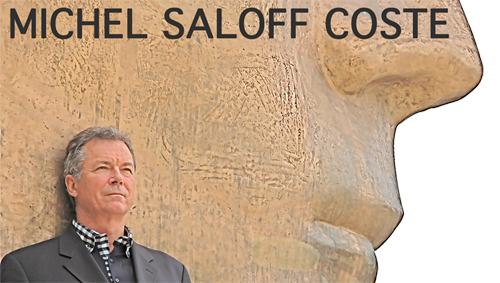
MICHEL SALOFF-COSTE

Michel Saloff-Coste is an international integral and global futurist, researcher, business advisor, and entrepreneur. He works with individuals, corporations, universities, and governments to foster fast insights into alternative futures. As a respected analyst and keynote speaker, he has addressed many of the world’s leading organisations, raising global future issues and creating strategic awareness. Alongside his facilitation expertise, he delivers engaging, transformational, and inspirational speeches and workshops.


Operating professionally across Europe, America, and Asia, Michel has extensive experience in transition management, organisational culture, consumer behaviour, business development, and applied futures studies. He addresses a wide range of topics within the field of futures studies and innovation, including blockchain, artificial intelligence, and robotics.


In technology, Michel explores emerging uses and their significance for society and modern life. He enjoys envisioning the future with innovative and creative leaders across diverse sectors, translating these strategic insights into leading sustainable solutions and ecosystems.


Michel’s consulting work in management strategy and communication inspired his deeper research into alternative futures. Between 1985 and 1987, he directed a multidisciplinary workshop on societal change at the French Ministry of Research. His research has led to the publication of popular books and numerous papers on leadership, the 21st century, and the information society. Among his achievements is the founding of the Club of Budapest in France, an international non-profit organisation fostering dialogue on complex global issues.


In 1991, he joined the Bossard Consulting Group (now Capgemini) as Senior Consultant and Research Director. From 1993 to 2005, he created and led his own research and consultancy firm, MSC, focusing on futures studies, management, strategy, communication, and global governance. Concurrently, he taught avant-garde management at HEC Paris between 1995 and 2005. In 2011, he became Head of R&D and International Development at In Principo, an avant-garde consulting firm specialising in innovation and co-creation.


In 2012, Michel founded Design Me a Planet, an NGO dedicated to researching long-term solutions to global challenges. In 2013, he became International Development Associate at the Copenhagen Institute for Futures Studies. From September 2014, he served as Founder and Executive Director of the Future Innovation Institute at Lille Catholic University, later becoming Director of Future Studies in 2018, and Special Adviser to the Presidency in 2023. He is currently the initiator of the International Foresight Research Network.


Michel studied art and humanities at the École Nationale des Beaux-Arts de Paris and continues to dedicate part of his time and talent to contemporary art. He has explored various mediums, including painting, photography, video, and music. His work has been exhibited and collected by private galleries and individuals, as well as major art institutions such as the Museum of Modern Art in Paris and the Centre Georges Pompidou.


The focus of Michel Saloff-Coste’s research—and the theme of many of his books—is the paradigm shift within the information society, which he defines as a Creation-Communication Society. He maps the evolution of civilisation in four waves: hunting & gathering, agriculture & breeding, industry & commerce, and creation & communication. In collaboration with Carine Dartiguepeyrou, he further developed this framework into ten long-term futures visions called “horizons,” published in their co-authored book Les Horizons du Futur.


Today, Michel’s research passions include:

  • The major trends transforming the development of civilisation at a planetary level

  • The cultural, managerial, systemic, and structural changes countries and companies must undertake

  • How economic, social, and ecological development can be aligned for humanity’s future

  • The impact of artificial intelligence on education, including a start-up project in this field


His personal aspiration is to catalyse the emerging new civilisation, co-create world-sustainable business models, and bring beauty, truth, and ethics to build a better world. As an integral activist, he studies and promotes the political development of eco-villages and eco-towns based on collective systemic ecological intelligence and creativity.


Michel Saloff-Coste has collaborated with remarkable figures such as Ervin Laszlo, Gilles Deleuze, Andy Warhol, Thierry Gaudin, Philippe Starck, Karl Lagerfeld, and Jacques Delord, as well as pioneering organisations including 3Suisses, Apple, Bel, Bonduelle, CDC, Decathlon, EDF, ESSEC France, Télécom, HEC, Peugeot, PPR, Rand, Reebok, Kompass, L’Oréal, Sciences Po, Sodexo, the Ministry of Research, and the European Commission. He has taught at major academic institutions such as HEC, École des Mines, Sciences Po Paris, and Lille Catholic University. In the past decade, he has studied the seventeen most innovative ecosystems worldwide within the context of the United Nations Sustainable Development Goals (SDGs), and has attended courses at leading universities such as Harvard, MIT, Stanford, and Berkeley.


An author of numerous bestselling books, Michel Saloff-Coste is regularly interviewed by press, radio, and television.


Principal publications include:

Vêpres Laquées (Baudouin, 1979); Paris la nuit (Balland, 1982); Le management systémique de la complexité(Aditech, Ministry of Research, 1990); Le management du troisième millénaire (Guy Trédaniel, 1991, 1999, 2005); The Information Revolution and the Arab World (ECSSR, 1999); Manifeste pour la technologie au service de l’homme(INP Grenoble, 2000); Les Horizons du Futur (Guy Trédaniel, 2001); Year in Perspective (World Business Academy, 2002); Trouver son génie (Guy Trédaniel, 2005); La société de l’information enjeu stratégique (Revue Agir, 2005); Le dirigeant du troisième millénaire (Éditions d’Organisation, 2006); Mimétisme et singularité, deux leviers de croissance(La Revue de Kea, 2006); La stratégie créative de singularisation (La Revue de Kea, 2007); Le DRH du troisième millénaire (Village Mondial Pearson, 2007, 2008); Réenchanter le futur (Village Mondial Pearson, 2009); Prospective d’un monde en mutation (L’Harmattan, 2010); Au-delà de la crise financière (L’Harmattan, 2011); Les voies de la résilience (L’Harmattan, 2012); La nouvelle avant-garde (L’Harmattan, 2013); Post-histoire (Amazon, 2014); Planetary Futures (Amazon, 2014); Design Me a Planet (Amazon, 2014); Quelle énergie à long terme pour le futur de la planète Terre ? (IFP, Amazon, 2014); L’arbre de la vie (Nextedition, 2014); Le secret de Julia (Nextedition, 2014); Le futur contemporain : une boîte à outils pour l’innovation intégrale (Nextedition, 2014); Panorama mondial des écosystèmes innovants (EAK, 2018); Les écosystèmes innovants (L’Harmattan, 2019); Écosystème Innovant (ISTE, 2021); Innovation Ecosystems (Wiley, 2022); Futurs (ISTE, 2022); Futurs (Wiley, 2023); La prospective en action (ISTE, 2022); Futures in Action (Wiley, 2024).

2025/05/29

2025 06 11 25th International Futures Conference of Finland Futures Research Centre and Finland Futures Academy, University of Turku with Michel Saloff-Coste

 ‘Futures of Technologies’ is the 25th international Futures Conference of Finland Futures Research Centre and Finland Futures Academy, University of Turku.  It is co-organised together with VTT Technical Research Centre of Finland Ltd.

The conference will aim to generate multidisciplinary, stimulating and critical discussions concerning futures of technologies. The event promotes networking between people interested in futures issues from different backgrounds and perspectives.

The conference program will consist of keynote lectures, parallel sessions and participatory workshops. The event will be organised onsite in Turku. Conference starts on Tuesday 10 June 2025 and continues until Thursday 12 June. 

Welcome to Turku!

https://futuresconference2025.com/about/

--------------------------------------------------------------------------

Futures Conference 2025 focuses on the futures of technologies, their development, importance, role and risks as a driver of social change. What are the effects of social and environmental changes on technological development and vice versa? 

The conference will focus on question like how can organisations and societies proactively manage the dual role of technology both as a solution and a source of new societal dilemmas; how can AI and other technologies contribute in advancing the scientific discipline and innovative approaches to technology within futures studies and foresight; how to perceive and rethink the linkages between novel technologies and policy-making; and how to reconstruct innovation policies in an era of pervasive technological changes.

Technology often emerges both as a solution to and a source of new societal dilemmas. ‘Mutual shaping of socio-technical transformation’ refers to the idea that technological and societal changes influence and shape each other in a reciprocal manner.

Futures studies has emphasised envisioning multiple, competing preferable futures and recognising that the future is not predetermined but shaped by our collective choices. Our choices will also lead to impacts, calling for ex-ante impact assessment of our technological futures. Assessing the potential effects of technologies before they are fully implemented, we can better foresee and mitigate negative consequences while enhancing positive outcomes. This proactive approach to foresight enables societies to navigate the uncertainties of technological innovation more effectively. In the industrial context, the pursuit of competitiveness through the adoption of new technologies underscores the necessity for stronger integration of foresight into management practices in both strategic and tactical level.

Policy-making, especially in technology and innovation policies, are connected in multiple ways to technology development. Recently, there has been multiple calls from various actors to ‘reboot’ innovation system policies and to rethink the linkages between novel technologies and policy-making. Thus, there is a need to scrutinise and reconstruct different aspects of the ‘new innovation policies’ in the context of new pervasive technologies.

The ‘Futures of Technologies’ conference will create a cross-sectoral platform where participants can meet, share, and discuss these issues. The conference program will consist of plenary lectures, parallel paper and panel sessions as well as participatory workshops. The conference will aim to generate multidisciplinary, stimulating and critical discussions that promote networking between people interested in futures issues from different backgrounds and perspectives.   

--------------------------------------------------------------------


2025: Futures of Technologies – Mutual Shaping of Socio-Technical Transformations

10–12 June 2025, Turku, Finland 


Chair & Invite Session: Futures in action ¨

Time: Thursday 12 June at 15.00–16.30

Room: GOTO 31

Chair: Michel Saloff-Coste

Futurs in action (wiley 2025) ¨

Carine Dartiguepeyrou – Michel Saloff-Coste

International Foresight Research Network, France & Université Catholique de Lille, France


Futures in Action: Strategic Anticipations and Deployments in Organizations Facing the Future

Edited by Carine Dartiguepeyrou & Michel Saloff-Coste, and published by ISTE / Wiley in November 2024, this book is a vital resource for organizations navigating an increasingly unpredictable world. Clocking in at approximately 256 pages, this collective work provides a comprehensive guide to proactive future-building by bridging the gap between strategic foresight theory and its practical application.


What the Book Covers

The book is structured into three distinct parts, offering a holistic view of strategic anticipation:

  • Part 1: The Prospective Mindset lays the groundwork by introducing fundamental concepts, methods, and approaches to futures thinking. It emphasizes the importance of a long-term vision, the detection of weak signals, and the crucial roles of values and imagination in shaping the future.
  • Part 2: Case Studies from Organizations brings theory to life with real-world examples of foresight in action across various sectors. You'll find insights into how organizations in tourism manage uncertainty, how media companies are reconfiguring journalistic practices in the age of AI, and how public institutions and academia are experimenting with participatory foresight tools. Each case study details methodologies and provides actionable insights.
  • Part 3: Scenarios and Strategic Lessons delves into strategic scenario building around critical themes like post-COVID futures, low-carbon transitions, and alternative civilizational models. This section offers valuable lessons on shock management, discontinuity, and leadership in uncertain times.


Key Concepts You'll Learn

Futures in Action highlights several core concepts essential for effective future-building:

  • Consciousness of the Future: Developing an anticipatory awareness and fostering collective resilience.
  • Operational Foresight: Implementing structured frameworks—framing, exploring, designing, and deploying—to effectively conduct futures work.
  • Collective Mobilization: Utilizing foresight to cultivate a shared vision, enhance engagement, and achieve strategic alignment within an organization.
  • Scenarios as Tools for Navigation: Leveraging scenarios to empower leaders in making informed decisions amidst volatility.


Who Should Read This Book?

This book is an invaluable resource for a diverse audience, including:

  • Foresight professionals, strategists, and public administrators
  • Innovation leaders, consultants, and academics
  • Change agents involved in transformation initiatives
  • Any organization committed to navigating long-term challenges and seizing opportunities


Why This Book Matters

As the key quote from the book states, "Foresight helps to rally players around a common vision, influence strategic decisions, and inspire innovation and organizational transformation." This book doesn't just discuss anticipating the future; it provides a practical roadmap for acting on it collectively and strategically. By blending methodology with real-world practice, it demonstrates how various organizations can embed foresight into their governance and innovation processes, enabling them to shift from a reactive stance to a proactive one.


---------------------------------------------------------------------------------------------------------------------------


2025: Futures of Technologies – Mutual Shaping of Socio-Technical Transformations, 10–12 June 2025, Turku, Finland


Futures, the great turn (book Wiley, 2023) •


Linkages between foresight, technology, and policymaking •¨
Time: Thursday 12 June at 13.00–14.30
Room: TEATRO
Chair: Pasi Keski-Pukkila
Futures, the great turn (book Wiley, 2023) •
Carine Dartiguepeyrou – Michel Saloff-Coste
International Foresight Research Network, France & Université Catholique de Lille, France


Global Synthesis: Futures: The Great Turn (2023)


Executive Overview

"Futures: The Great Turn" represents a comprehensive examination of civilizational transformation through the lens of futures studies, offering a transnational perspective on how humanity might navigate the critical turning point of our era. Edited by Carine Dartiguepeyrou and Michel Saloff-Coste, this 2023 work challenges conventional approaches to foresight by embracing cultural diversity and ethical considerations in imagining desirable futures.


Core Conceptual Framework

The Great Turn Paradigm

The central thesis revolves around "the challenge of the great turning point of our civilization," which demands liberation from existing prejudices to "imagine and build desirable futures" through an inherently "ethical and prospective" process. Futures : The Great Turn by Michel Saloff-Coste (2023, Hardcover) for sale online | eBay This framing positions our current historical moment as a critical juncture requiring fundamental shifts in how we conceptualize and prepare for the future.

Pluralistic Futures Methodology

The work operates on the foundational principle that "there are many futures, not just one" and correspondingly "many ways to conceive and practice foresight." Futures: The Great Turn - Carine Dartiguepeyrou, Michel Saloff-Coste - 9781394225750 - E-book | Krisostomus This multiplicity approach rejects deterministic forecasting in favor of exploring diverse scenarios and methodological approaches, reflecting the complexity of our interconnected world.


Structural Architecture

Epistemological Foundation

The book begins with "Epistemological Outlines" that establish the theoretical groundwork for understanding foresight as both science and art. Chapter 1, "Foresight and Civilization," explores the relationship between unpredictable futures and civilizational dynamics, examining how media perspectives shape our understanding of change and identifying key megatrends that influence foresight epistemology.

Cultural and Temporal Trajectories

Chapter 2, "Cultures and Trajectories," delves into how different cultural contexts shape future-oriented thinking, providing the framework for the book's transnational approach to futures studies.

Global Perspectives Integration

Transnational Scope

The work "proposes different cultural and ethical views on civilizational transformation by offering a rare, transnational panorama of the visions of the future in a European, American and Chinese context." This tri-continental approach recognizes that future-building cannot be divorced from cultural contexts and value systems.

Ethical Imperative

The emphasis on ethics throughout the work suggests that futures studies must grapple with questions of desirability, not merely possibility. The editors position foresight as an inherently moral endeavor that requires careful consideration of values and outcomes.


Methodological Innovation

Complexity Navigation

In our "complex, uncertain and geopolitically transforming world, we must be open to the diversity" of perspectives and approaches. Futures: The Great Turn - Carine Dartiguepeyrou, Michel Saloff-Coste - 9781394225750 - E-book | Krisostomus This acknowledgment of complexity drives the book's methodological pluralism, suggesting that no single approach to foresight can adequately address the multifaceted challenges of civilizational transformation.

Media and Communication Dynamics

The inclusion of media perspectives in examining foresight recognizes the crucial role of communication technologies and narrative frameworks in shaping collective future consciousness.


Scholarly Positioning

Academic Integration

As part of the "Innovation, Entrepreneurship, Management: Innovation and Technology" series (Volume 18), the work bridges academic rigor with practical application, positioning futures studies within broader discussions of innovation and technological change.

Expert Collaboration

The editorial partnership between Carine Dartiguepeyrou, "a political scientist and independent futurist" collaborating with the Department of Foresight at Université Catholique de Lille, and Michel Saloff-Coste, "Director of Foresight at the Université Catholique de Lille" and organizational advisor, Amazon.com: Futures: The Great Turn (Innovation, Entrepreneurship, Management: Innovation and Technology, 18): 9781786308665: Dartiguepeyrou, Carine, Saloff-Coste, Michel: Books represents a fusion of independent scholarly perspective with institutional expertise.


Contemporary Relevance

Civilizational Crossroads

The timing of this 2023 publication positions it within contemporary discussions about global challenges including climate change, technological disruption, geopolitical realignment, and social transformation. The "Great Turn" concept captures the sense of living through a historical inflection point.

Practical Application

Beyond theoretical exploration, the work appears oriented toward actionable insights for building "desirable futures," suggesting practical applications for policymakers, organizational leaders, and civil society actors.


Synthesis Conclusion

"Futures: The Great Turn" emerges as a significant contribution to contemporary futures studies by advocating for a culturally inclusive, ethically grounded, and methodologically diverse approach to civilizational foresight. The work's transnational perspective and emphasis on the "great turning point" position it as both a diagnostic tool for understanding our current historical moment and a prescriptive framework for navigating toward more desirable futures.

The book's integration of epistemological rigor with cultural sensitivity, combined with its practical orientation toward "building" rather than merely predicting futures, represents a mature evolution in futures studies that acknowledges both the complexity of global challenges and the diversity of human responses to uncertainty. As such, it serves as both an academic resource and a practical guide for those engaged in the critical work of civilizational transformation.